
NAPIT Welcomes IET Consultation on Electrical Energy Storage Code of Practice, 4th Edition
26 October 2026
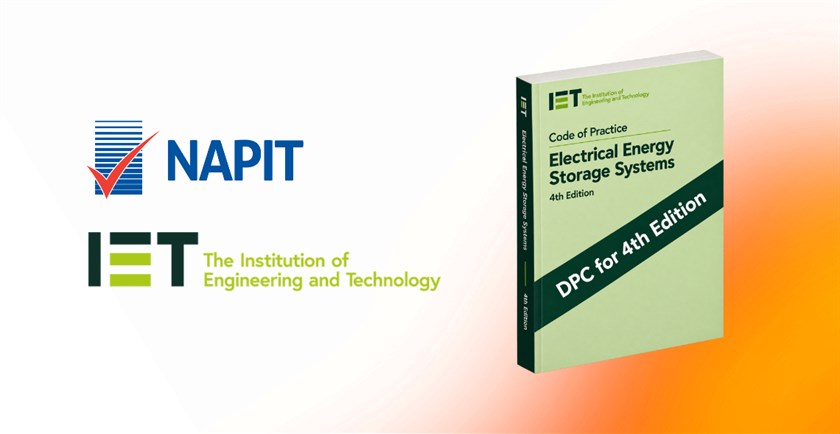
NAPIT is encouraging electrical professionals to review and comment on the draft fourth edition of the IET Code of Practice for Electrical Energy Storage Systems.
This code of practice looks at electrical energy storage systems (EESS) applications and provides information for practitioners to safely and effectively specify, design, install, commission, operate and maintain a system.
Its scope covers electrochemical energy storage systems, their integration into low-voltage AC and DC power systems, and alignment with relevant standards, regulations and guidance. It applies to individual dwellings, commercial applications, including multi-occupancy buildings and multi-occupancy residential buildings, and industrial applications.
The fourth edition aims to bring the code of practice up to date with the developments in the electrical energy storage market and align the with Amendment 4 of BS 7671.
- Updated guidance and reference to other related standards
- New guidance on islanding equipment
- Expanded battery technology coverage including sodium-ion batteries
- New guidance for values of consumer earth electrode resistance
- Enhanced guidance on arc flash, fire safety, RCD selection, earthing, signage, and certification
Steve Humphreys, Technical Commercial Manager at NAPIT, said: “I would encourage all members involved in the design, installation, inspection and testing of battery storage systems to take the opportunity to review and comment on the latest draft edition of the IET Code of Practice for Electrical Energy Storage Systems.
“Industry feedback plays a vital role in ensuring guidance remains practical, technically correct and reflective of actual installation practices. This gives members a chance to help shape a key industry document before its publication.”
The deadline for comments is 9am on Monday 16 November 2026.
