NAPIT Speak to Women in the Industry to Celebrate International Women in Engineering Day 2026
22 June 2026
International Women in Engineering Day gives women engineers around the world a profile, even though they remain hugely underrepresented. This awareness day, celebrated on June 23rd, plays a vital role in encouraging more young women and girls to pursue careers in engineering.
2025 figures indicate that in the UK, only 16.9% of engineers are women. Girls make up only 12% of engineering and technology T Level students, and just 17% of engineering and technology apprenticeship starts.
This year’s theme is Engineering Intelligence and aims to highlight how women contribute to every part of engineering intelligence, through design, safeguarding, leading and innovating, yet are often overlooked.
To celebrate International Women in Engineering Day 2026, NAPIT are shining a spotlight on women in the industry and the fantastic work they have contributed to ‘engineering intelligence’.
Emma Dutton is the Implementation and Support Manager at AlphaESS UK Ltd. Emma began her career as an electrical apprentice in 1999.
Discussing how we can uplift women in the industry, she said ‘knowledge is power’.
How can women uplift one another?
“I think women need to reach out to each other a little bit more and not be scared to ask any questions. Knowledge is power. At the end of the day, the more you ask, the more you'll learn.
“And we're all here to support each other, women or men, it doesn't really matter. It can be a lonely place out there, especially if you're working for yourself.
Always reach out, you've got social media nowadays as well, which I never had back in my day. If you've got social media, reach out, share your post, and just ask any questions. We can all do the job.”
Technical Director at Surge Protection Device Ltd, Kirsty Johnson, is considered an expert in the field of lighting and surge protection and is part of the JPEL committee. Kirsty works with electricians and electrical engineers on the design and specification of surge protection devices, supporting the industry as much as possible with CPD and talks on the correct application of SPDs, which is mostly a lot of myth-busting, she says.
Have you faced any challenges in your career, and how have you overcome them?
Kirsty explained: “I face challenges regularly, but this is why I love my job. It stretches me, and this means I am continually developing and learning.”
Are there any key milestones or achievements in your career that you’re particularly proud of?
“Becoming a member of the IET, without a traditional degree background, along with becoming a member of the JPEL committee, where I feel that I can contribute to positive change within our industry.”
What advice would you give to other women considering a career in the electrical industry?
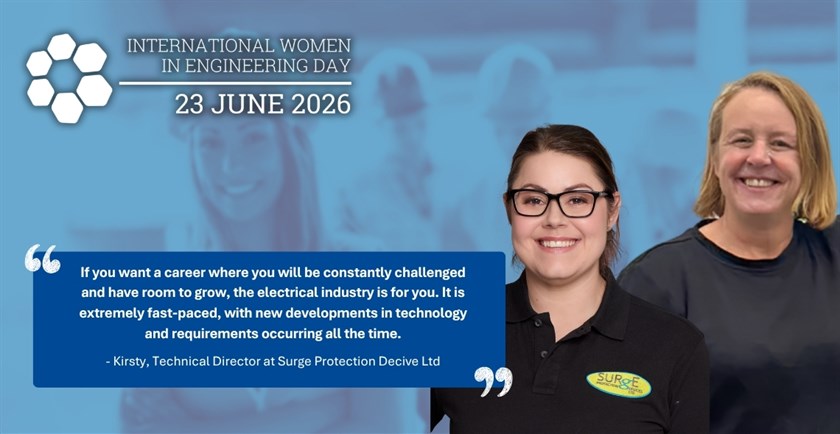
“Do it!” she said. “If you want a career where you will be constantly challenged and have room to grow, the electrical industry is for you. It is extremely fast paced, with new developments in technology and requirements occurring all the time; you will never be bored!”
Speaking about what she would like to see improve or change to make the industry more inclusive, Kirsty said: “I think it is moving in the right direction, the issue is that I want to be included because of my skills, not my gender. Sometimes, I have found that inclusivity schemes actually backfire, because it can be assumed that you are in the room to tick a box, rather than having your own credibility.”
Hannah Thompson, Head of Communications at NAPIT, said: “Hearing from women our the industry is a great way to push the message of ‘engineering intelligence’. Sharing experiences and advice, highlighting challenges and ways we can uplift one another as women, is key to inspiring women and young girls to make that step into the industry.”