
Government Urged to Rethink Pay Per Mile Scheme for Electric Vehicles by NAPIT
24 February 2026
NAPIT has urged the Government to rethink plans to charge drivers of electric vehicles (EVs) a fee for every mile they drive amid concerns it could slow down the transition to electric vehicles and impact its members who install chargers.
The Government announced the plans for an electric vehicle excise duty (eVED), which would see EV drivers charged 3p per mile from April 2028, in last year’s budget. The move is intended to replace income lost through fuel duty as more people replace petrol and diesel cars with electric vehicles.
A consultation on the plans is being carried out by the Treasury and runs until 18 March 2026. The Government say drivers of petrol and diesel vehicles pay tax on how much they drive through fuel duty at the pump, while drivers of electric vehicles currently make no equivalent contribution.
By 2030 around one in five car drivers are expected to pay no fuel duty at all, while other motorists will continue to contribute an average of £480 a year. Although fuel duty is not ring fenced on improving and maintain roads the Government say “given all cars cause congestion and wear and tear on the roads, this is not a fair outcome.”
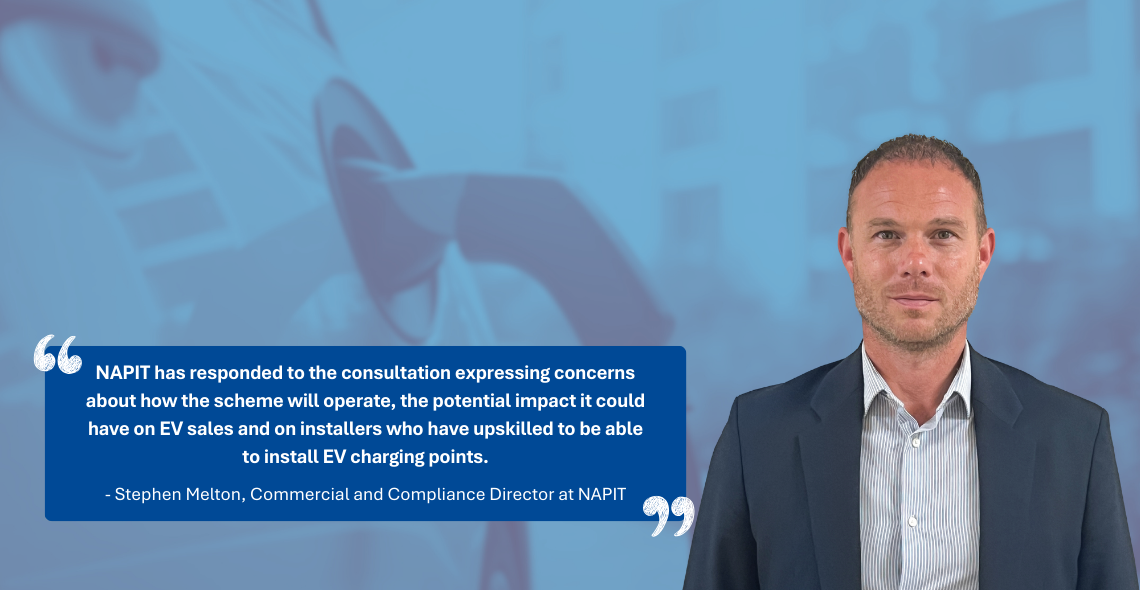
NAPIT has responded to the consultation expressing concerns about how the scheme will operate, the potential impact it could have on EV sales and on installers who have upskilled to be able to install EV charging points.
Stephen Melton, NAPIT Director of Commercial and Compliance said: “While it is understandable that the Government will need to look at replacing income lost through reduced fuel duty revenue as more motorists switch to electric vehicles, we have questions about the timing and fairness of the current proposals.
“NAPIT is a certification body and training provider with over 20,000 members in the electrical industry, including a large number taking advantage of the growth opportunities provided by the transition away from fossil fuels towards low carbon heating and transport.
“Installing electric vehicle charging points is a growing area of business for our members, but we have concerns that future growth could be negatively impacted as consumers decide any potential savings from driving an EV will be impacted by extra taxes on EVs.”
According to the Office for Budget Responsibility, eVED could raise as much as £1.4 billion per year by 2029-30. This is despite the fact that the OBR also estimates that by the end of 2031 there will be 440,000 fewer EVs being sold than there would have otherwise been as prospective buyers are put off by the additional charges.
Electric vehicle drivers already pay tax, including VED along with 5% VAT on electricity if vehicles are charged at home and 20% if charged away from home.
Stephen Melton added: “The introduction of eVED sends a confusing message at a critical moment in the EV transition, risks reducing EV uptake, weakening the investment case for expanding the rapid-charging network and having a negative impact on electricians installing home charging points.
“Many of our members are sole traders or small businesses and some have made the switch to using electric vans to carry out their work so will also be impacted with additional costs as they travel to carry out work in homes and businesses across the country.”
The Government’s consultation can be viewed here. NAPIT encourages EV drivers and installers of charge points to respond and make their views know.